Drugs discovered during a search can quickly lead to serious criminal charges, but prosecutors must still prove possession. In cases involving drug possession in Ponte Vedra, simply being near drugs does not automatically establish criminal possession, so investigators must gather evidence that connects an individual to the substance and the circumstances surrounding its discovery. Courts often examine where the drugs were found, who had access to the area, and what facts suggest control or ownership. These cases often depend on small details that may not seem important at first but can shape how the case is viewed.
Florida law prohibits the possession of certain controlled substances. The law makes it illegal to knowingly possess drugs such as cocaine, heroin, and other substances listed in the state’s controlled drug schedules. To secure a conviction, prosecutors must present evidence linking the accused to the substance and supporting the claim of possession.
Because these cases often turn on investigative details, even small facts can influence how everything unfolds in court. Details about location, access, and behavior often become part of the broader legal review during criminal proceedings. When questions arise about how prosecutors attempt to prove possession, speaking with a skilled Ponte Vedra drug crimes lawyer can help individuals better understand their rights and legal options.
Key Takeaways
- Prosecutors must prove a controlled substance existed and that the accused knowingly possessed it.
- Possession may be shown through actual control or constructive control over the area where drugs were found.
- Evidence often includes laboratory testing, officer testimony, and documentation linking the individual to the substance.
- Courts evaluate factors such as location, access, and behavior to determine whether possession is established.
What Prosecutors Must Prove in a Drug Possession Case
Examining how prosecutors build a possession case helps explain why certain evidence becomes important in court. At its core, the case must show that the accused knowingly possessed the substance.
Core Elements Prosecutors Must Establish
For a drug possession case to move forward, prosecutors must first show that a controlled substance actually existed. Investigators usually rely on laboratory testing to confirm the identity of the substance after it is recovered. The evidence must also connect the accused to the substance through reliable facts and surrounding circumstances.
Courts also look at whether the accused person had control over the drugs at the time they were discovered. This may involve access to the location where the substance was found or authority over that area.
Actual Possession and Constructive Possession
Courts generally recognize two ways prosecutors may attempt to prove possession in a criminal case. Actual possession occurs when drugs are discovered directly on the individual, such as in clothing or personal belongings.
In these situations, the physical connection between the person and the substance often becomes central evidence. Constructive possession applies when drugs are located nearby but not directly on the person. For example, substances may be found inside a vehicle, home, or another area associated with the accused individual.
Drug Possession Cases in Ponte Vedra Beach
Drug possession charges follow a specific path through the local court system after an arrest occurs. Knowing where these cases are handled helps readers understand how the legal process unfolds in this part of Florida.
Local Court Structure for Possession Charges
- Ponte Vedra Beach is located in St. Johns County, which determines where criminal charges from the area are typically processed.
- When officers make an arrest, the case typically moves through the St. Johns County court system.
- Many hearings take place at the St. Johns County Courthouse.
- Prosecutors from the State Attorney’s Office review evidence and present charges during court proceedings.
- Judges oversee hearings and evaluate the facts presented by both sides.
Why Local Court Procedures Matter
- Local court procedures influence how possession cases move from arrest to later hearings.
- Judges review investigative reports prepared by local law enforcement before making early decisions.
- These reports often influence how prosecutors choose to proceed with the case.
- Court scheduling, filings, and procedural steps are managed through the St. Johns County system.
- Filing deadlines and hearing schedules may affect how quickly the case progresses.
Evidence Prosecutors Use To Prove Possession
Drug possession cases rely heavily on evidence collected during the investigation. Prosecutors use several types of proof to show that a controlled substance existed and that the accused person possessed it.
Physical and Forensic Evidence
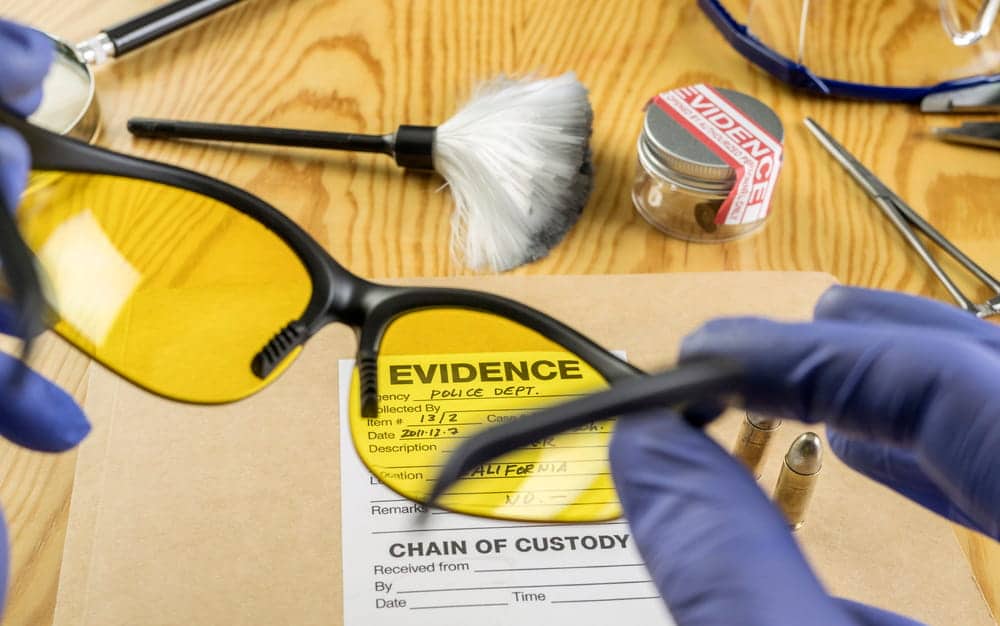
Physical evidence often forms the foundation of a possession case. Substances recovered during a search are typically sent to a forensic laboratory for testing and analysis. Laboratory results confirm whether the material is a controlled substance. Officers also document where the drugs were discovered and how they were recovered. Evidence must be carefully handled and recorded through a chain-of-custody procedure.
Testimony and Investigative Evidence
Testimony is also used to explain how the suspected drugs were discovered. Arresting officers often describe the events leading to the search and recovery of the substance. Investigators may also explain how the accused person was connected to the location. Witness statements sometimes become part of the evidence presented in court. Body camera footage may also support the officer’s account of the investigation.
Legal Standards Courts Use To Evaluate Possession
Courts apply specific legal standards when determining whether prosecutors have proven possession in a criminal case. These standards guide how judges review the evidence presented during the proceedings.
Florida Law Governing Possession
Florida law prohibits possessing certain controlled substances without legal authorization. The case must show that the accused person possessed the substance during the incident under investigation, with evidence connecting the individual directly to the drugs discovered. Drug possession offenses are addressed in Florida Statutes § 893.13. This law defines unlawful possession and penalties for controlled substance violations.
Knowledge and Legal Responsibility
Courts also consider whether the accused person knew the drugs were present. Knowledge becomes an important factor when substances appear in shared spaces or vehicles. The evidence must suggest that the individual was aware of the drugs. Florida law addresses questions involving knowledge of the substance. Judges review the surrounding circumstances when evaluating this issue.
Factors That Often Strengthen Possession Cases
Certain circumstances can make it easier to support allegations of possession in court. Investigators often review surrounding details to determine whether the evidence supports a claim of possession.
Location and Access to the Substance
- The location where drugs are discovered can influence how prosecutors present their case.
- Substances found inside vehicles often raise questions about ownership and control.
- When several people share the same space, determining responsibility becomes more complex.
- Investigators review who had access to the area where the drugs were located.
- Control over the location may become an important factor in the case.
Behavior and Circumstances During the Investigation
- Officers also consider behavior they observe during the investigation.
- Police reports may describe actions or statements made during the stop or search.
- These observations sometimes become part of the evidence reviewed in court.
- Attempts to conceal substances or objects may draw additional attention during the encounter.
- Investigators often analyze the sequence of events leading to the discovery of the substance.

How Prosecutors Connect a Person to the Drugs
Prosecutors must link the drugs to a specific person before a possession charge can succeed. Investigators often examine the surrounding circumstances to determine who likely controlled the substance.
When Drugs Are Found in a Shared Vehicle
During a traffic stop in St. Johns County, officers may discover drugs inside a vehicle. The substance may appear in a center console while several occupants deny ownership. Investigators then examine who had access to that area and who appeared to control it, since those details often become central to the investigation. Prosecutors review the surrounding facts before deciding how to proceed.
How Prosecutors Evaluate Evidence in Situations Like This
Prosecutors search for evidence that connects the drugs to a specific individual. Statements made during the stop may become relevant during the investigation. Personal belongings located near the drugs may also draw attention. Courts later examine whether the available facts reasonably suggest knowledge and control, reviewing the full circumstances surrounding the discovery.
Call a Ponte Vedra Drug Crimes Lawyer
Drug possession cases in Ponte Vedra Beach often depend on whether prosecutors can prove a person knowingly controlled an illegal substance. Investigators rely on forensic testing, officer testimony, and surrounding circumstances to connect an individual to the drugs involved.
In St. Johns County courts, judges review the full circumstances surrounding the investigation and discovery of the substance. They consider the location of the drugs, the accused person’s access to that area, and other supporting evidence. When questions arise about how prosecutors build these cases, speaking with experienced lawyers in Ponte Vedra Beach can help individuals understand their rights and legal options.
At Malcolm Anthony, P.A., we understand how confusing a drug possession charge can feel, especially when questions about evidence and control arise. Our team carefully reviews investigative reports, explains how Florida drug laws apply to your situation, and works to protect your rights throughout the legal process. Contact us today or call (904) 285-4529 to speak with our experienced lawyer about your case.


